
Three persons were killed and 17 others injured when Pakistani Rangers violated the ceasefire twice and heavily shelled civilian areas and border posts along the International Border in R S Pura and Arnia sectors of Jammu district on Friday, drawing retaliation from the Border Security Force.

Prime Minister Modi made a strategic blunder of Nehruvian proportions -- presuming no war can happen now, and the Chinese won't be a military threat and risk their economic interests, observes Shekhar Gupta.

The latest updates on the fallout of one of the most daring strikes carried out by the Indian Army, attacking terrorists across the Line of Control in Pakistan-occupied Kashmir.

India has welcomed the UAE's announcement to confer the top civilian award on Modi.

The three districts are among over a dozen in the state that were lashed by incessant rain for close to 48 hours bringing normal business to a grinding halt and disrupting rail and road traffic in most places.
India and Pakistan have agreed to strictly observe all agreements on ceasefire along the Line of Control (LoC) and other sectors, according to a joint statement on Thursday.
This is the second major ceasefire violation along the IB this month and came despite Director General Military Operations of the two countries agreeing, on May 29, to implement the ceasefire pact of 2003 in "letter and spirit".
If solutions are not found, adequately and in good time, things could simply slip out of everyone's hands, warns N Sathiya Moorthy.

Prime Minister Narendra Modi will chair a high-level meeting on Tuesday to review the situation in Jammu and Kashmir which is witnessing violent clashes between security forces and protesters in the aftermath of killing of Hizbul Mujahideen's poster boy Burhan Wani.

The world's most wanted terrorist Osama bin Laden spending several years in a mansion in Abbottabad.

After weighing all the costs and benefits, the next administration is likely to reduce and restructure assistance to Pakistan but not to end it altogether, says Daniel S Markey.
'The heart of the matter is that India is not Israel.'
"South Asian studies" academics in the US would do well to introspect how they wittingly or unwittingly become part of Pakistan's proxy war in wielding influence over academics and policy, says Sankrant Sanu.
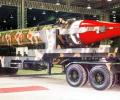
For the world and India, one of the most enduring challenges of the times is for Pakistan's nukes to be neutralised, before they are ever used by the State, their sponsored non-State actors or any rogue elements from the many terror tanzeems dotting Pakistan's unstable landscape, says Lieutenant General Kamal Davar (retd).

Amid a controversy over a Telangana Bharatiya Janata Party leader describing tennis star Sania Mirza as a "non-local" and "daughter-in-law" of Pakistan, Union Minister Prakash Javadekar on Thursday said the tennis ace is a pride and brand ambassador of India.

'Is Trump going to play a mediating role? Can he play a mediating role? It's out of the question.' 'Kashmir is an Indian responsibility.'
'I am aware that mention of a threat to Gulmarg emanating from my perception may send negative signals to tourists but there are realities which need to be taken stock of.' 'Gulmarg is not far from Srinagar and is what the army calls in its parlance "a big name place." Such places draw attention much faster when negative incidents take place and give value of eyeball attraction.'

'When the first Islamic State flags appeared, it was called an aberration.' 'When videos appeared, they were termed exceptions!' 'It is high time we accepted that the global jihad is here.'

'Omar Khorsani has called repeatedly for the most barbaric of attacks. He is very adept on social media. He is, in other words, eerily similar to the ISIS leader Baghdadi.' 'The crux of the army's 'strategic asset' policy -- its policy of regarding militants as those that can help Pakistan pursue its regional interests -- is that Pakistan needs help in weakening India or in keeping its presence minimal in the region.' Michael Kugelman reveals what the world can expect next from the Tehreek-e-Taliban Pakistan, the terrorists responsible for the Peshawar school massacre.

'Modi wants to be pragmatic -- acknowledge the problem of Pakistan and that full reconciliation is essentially a non-starter, but at the same time grab the low-hanging fruits (such as trade) to put things on a more even keel, to engender enough stability in the relationship to allow him to focus on other priorities.'

The governor's comments drew sharp reaction from former chief minister and senior Jammu and Kashmir National Conference leader Omar Abdullah, who said Malik should check his own reputation in Delhi.
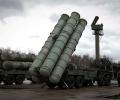
With cruise missile and air strikes being India's most likely response to a hypothetical Pakistani terrorist outrage in the future, retaliation from the Pakistan air force is inevitable. That is where the S-400 will come into play, says Ajai Shukla.

'I realised what a great leader he was by the way he took decisions to undertake the most-risky of missions.'

Modi should bluntly ask Chinese President Xi Jinping why he was willing to put his neck in the Pakistani noose, ignoring all that is known of Pakistan's perfidy, says B S Raghavan.

In a tit-for-tat action, Pakistan has declared an Indian High Commission official as persona non-grata and asked him to leave the country within 48 hours.

Little has changed in Digital India. The issue that rocked the nation 100 years ago still creates a furore in Indian society, says Syed Firdaus Ashraf.
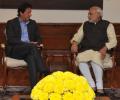
Should India engage Pakistan's generals directly, bypassing Imran? Ambassador G Parthasarathy, India's former high commissioner to Pakistan, ponders Delhi's diplomatic dilemma.
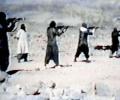
Security agencies were apprehending that terrorists operating in Jammu and Kashmir could step up attacks against security forces and civilians following the surgical strike conducted by the Army targeting terror launch pads in Pakistan-occupied Kashmir.

'The separatist resurgence in Balochistan is thwarting Pakistan's plans to build CPEC projects to optimally utilise Balochistan's energy reserves,' points out Brigadier Gurmeet Kanwal (retd).

India's doctrinal policy shift in combating terror by carrying out the Balakot air strikes inside Pakistan, appointment of a Chief of Defence Staff and hastening work on military modernisation marked a new beginning in 2019 in dealing with complex security challenges.
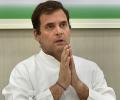
Nobody understands the deep causes of defeat and victory better than the defeated. The defeated have been to all the battlefields. They have looked into the eyes of their soldiers and those of the opponents, says Aakar Patel.

'If India is already involved in helping the insurgents in Baluchistan and Karachi, as Pakistan says, it is but one step for New Delhi to bring Dawood or Hafiz Saeed into its sights,' says Amulya Ganguli.

'The message to India is (with attacks like Pathankot) basically what the Pakistani army is trying to test is how serious are you when it concerns the peace process with that country.'

"We have removed the leader of an organisation that has continued to plot against and unleash attacks on American and coalition forces, to wage war against the Afghan people, and align itself with extremist groups like Al-Qaeda," the US president said in a statement.

The State Department and the White House too said that the US expects Pakistan to take decisive action against terrorists operating from its soil.
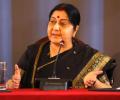
Tensions between India and Pakistan escalated after Indian fighter jets bombed terror group Jaish-e-Mohammed's biggest training camp near Balakot deep inside Pakistan on February 26.

'I knew one day I will explode if I don't get some sanity with making music.'
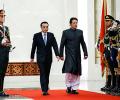
'Imran cannot escape responsibility for providing a mask to the Pakistan army to engage in unlawful activities and to wage aggression after India retaliated to the terrorist attack,' says Ambassador T P Sreenivasan.
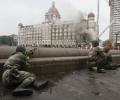
Through its early days to the 1980s, Pakistan sought to expand its sphere of Islamic influence through Afghanistan to Central Asia and got Pakistani citizens recruited in the Afghan government institutions in the 1990s when the Taliban were power. Now, it is looking eastward through India to Bangladesh and Myanmar to establish an imaginary caliphate.

'They know that India is no pushover.' 'We have to be extremely vigilant, remain ready and keep strengthening our positions.' 'We have to be militarily strong, whatever be the cost.'
